


(1936- )
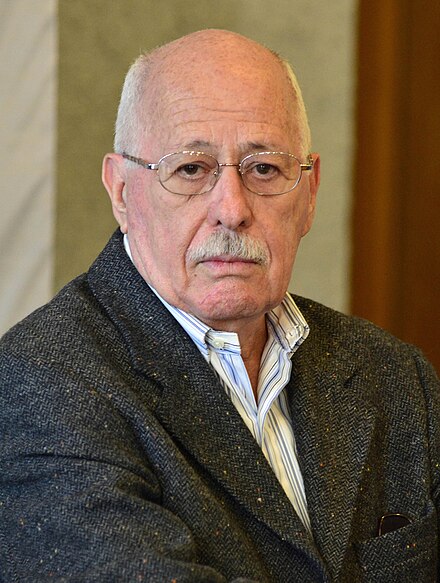
Silviano Santiago is recognised as one of the most important Brazilian thinkers and writers of the last fifty years, an astute critic and an innovative novelist and short story writer. When Santiago won the Camões Prize in 2022 for his body of work, the jury praised him for having received several national and international awards, including the Jabuti and the Oceanos Prizes, and for being “a thinker capable of civic and cultural intervention of great relevance, with a remarkable contribution to the projection of Portuguese as a language of critical thought, in Brazil and beyond (in Ibero-American and African countries, in the United States and in Europe)” (Instituto Camões 2022). Santiago’s contribution to critical theory is most evident in postcolonial studies and in Latin American cultural studies, where his key concepts, “the space in-between” and “the cosmopolitanism of the poor”, are discussed, cited and translated so as to circulate in Anglophone and Hispanic contexts. The concepts themselves interrogate the linguistic, cultural and social displacements that emerge with the circulation and migration of people, ideas, works and institutions. For Santiago, travel and displacements, both metaphorical and geographical, are not abstract matters, but rather the fundamental experiences of his trajectory, which provide the guiding threads of his critical and creative writing.
During Santiago’s childhood in Formigas, Minas Gerais, in the 1930s and 1940s, his first journeys took place through the ideas, words and images found in comic books, war films and Hollywood musicals. He lived a quiet life in a relatively provincial state of Brazil during a period of global violence, a juxtaposition manifested in the title of his 1978 poetry collection, Growing Up During the War in an Overseas Province. The poems in that volume contrast with the war reports taken from newspapers with the pastimes and toys of a child sheltered from those horrors. This collection demonstrates how his life could offer inspiration for his creative and critical work and, furthermore, indicates that, from an early age, he possessed an “attraction to the world,” to quote the term he developed in a 1995 essay on the intellectual position of Joaquim Nabuco. Despite the impulse to know the world, Santiago values his distinctive experiences and perspectives as a writer born and raised in a relatively peripheral country.
At the end of the 1950s, Santiago moved from his hometown to the state capital, Belo Horizonte, to study at the Federal University of Minas Gerais, where he completed his degree in Romance Languages and Literatures with a specialisation in French Literature in 1959. He then moved to Paris to continue his doctoral studies in French Studies at the Sorbonne, where he discovered the philosophical and critical thought of Michel Foucault, Louis Althusser and, more importantly, Jacques Derrida. He successfully defended his thesis on André Gide’s The Counterfeiters in 1968, but before that he had already begun working as a lecturer and researcher. In 1962, he received a job offer from the Department of Spanish and Portuguese at the University of New Mexico and, once again, moved from one side of the Atlantic to the other, settling in the south-west of the United States. There, he taught Portuguese language and Luso-Brazilian literature, beginning with the colonial texts of Pêro Vaz de Caminha and António Vieira, moving through the nineteenth-century masters of the Portuguese language, Eça de Queirós and Machado de Assis, and the Brazilian modernists, and concluding with the major Brazilian works of the twentieth century by Graciliano Ramos and João Guimarães Rosa, among others. The experience of rereading and teaching these texts promoted a more attentive analysis, which Santiago later transformed into critical essays. During his stay in New Mexico, he learned more about Hispanic American and Latino culture through contact with his colleagues and with other residents of the south-western region of the United States. He began to read Hispanic American writers, which contributed to the development of his ideas about Latin American literature and culture.
He continued living and developing his professional career in the United States for a decade, working at Rutgers University (New Jersey) and at the State University of New York, Buffalo (SUNY–Buffalo) as a university professor of French. Owing to his professional position and relative proximity to New York City, he had the opportunity to meet Foucault and Derrida in person, to take part in the most urgent theoretical debates of the time, and to socialise with Hélio Oiticica and other Latin American exiles. His stay in the United States contributed to the experiences and readings that informed the conceptualisation of the “the space in-between.” Santiago first proposed the term in French, in 1971, in a lecture entitled “L’entre-lieu du discours latino-américain”, delivered in Montreal, a bilingual Canadian city, at the invitation of Eugenio Donato to discuss anthropophagy. Instead of focusing his presentation on Brazilian Modernism, he proposed a more encompassing understanding of the “anthropophagic ritual” of Latin American discourse as an act of speaking and writing against established or dominant voices. Published in English in 1973, and later in Portuguese in 1978, the celebrated essay is the product of what Santiago read and interpreted during his studies in France and his years working in the United States, a distinctive mixture of French post-structuralist theory, the Brazilian colonial literature of Caminha and the contemporary Latin American narratives of Jorge Luis Borges, Julio Cortázar and Antônio Callado. From these origins in a multilingual and transnational context, the concept of the “space in-between” anticipates postcolonial theories that emphasise the critical and creative possibilities of transculturation or hybridity, such as Homi Bhabha’s “third space”, Gloria Anzaldúa’s “borderlands”, Mary Louise Pratt’s “contact zone”, and Néstor García Canclini’s “hybrid cultures”. Santiago’s Latin American critical thought engages in dialogue with his Argentine contemporaries, such as Beatriz Sarlo, Sylvia Molloy and Ricardo Piglia. In contrast to Molloy and Piglia, who remained in the United States for the rest of their careers, Santiago decided to return to Brazil in 1972, in the midst of the military dictatorship, to take up a professorship at the Pontifical Catholic University of Rio de Janeiro (PUC-Rio) and, later, at the Fluminense Federal University (UFF).
After his return, Santiago settled in Rio de Janeiro, but his roots in Brazil did not diminish his cosmopolitan drive or engagement with the world. He continued to travel internationally to attend conferences, deliver lectures as an invited speaker, and as a visiting professor at various prestigious universities, including Princeton and Indiana. At the same time, movement, the circulation and transformation of ideas, works and people emerge as the structural threads of his oeuvre. As editor of the 1976 collection Glossário de Derrida [A Derrida Glossary], Santiago collaborated with his students and other colleagues to introduce Jacques Derrida’s post-structuralist ideas to the Brazilian public. The book synthesised the philosophical concepts developed by Derrida in his first six texts, originally published in 1967 and 1972. The glossary identified Derrida’s main ideas and offered a critical reading of these philosophical concepts, which facilitated the understanding of Derridean thought and of the Portuguese translations of Writing and Difference (1971) and Of Grammatology (1973). Santiago’s distinctive voice as an essayist and fiction writer emerged during this period as he immersed himself in French critical thought while simultaneously reading and rereading canonical Brazilian and Hispanic American literature. The essays compiled in the volumes Uma literatura nos trópicos [Literature in the Tropics] (1978), Vale quanto pesa [Worth Its Weight] (1982) and Nas malhas da letra [In the Mesh of the Letter] (1988) analyse Brazil’s, and by extension Latin America’s, relationship with historical and contemporary powers in the political, economic and social spheres through careful readings of literary and cultural texts. The works discussed vary, but the themes recur and provide greater insight into dependence, colonisation, originality and imitation, as well as displacement. In addition to the celebrated essay “O entre-lugar do discurso latino-americano” [“The space in-between of Latin American Discourse”], Santiago wrote and published perceptive texts such as “Apesar de dependente, universal” [“Dependent Yet Universal”] (1980), which discusses the dialectic of dependence and universality through a reading of José de Anchieta’s poetry, and “A permanência do discurso da tradição no modernismo”[“The Permanence of Traditional Discourse in Modernism”] (1985), which analyses the dynamics between tradition and modernity in Brazilian and global avant-gardes.
While considering Brazil’s place within literary and cultural discussions in his critical essays, Santiago began to establish himself as a novelist. He published his first novel, Em liberdade: uma ficção [Free: a fiction], in 1981, which offers a fictionalisation of the life of the Brazilian writer Graciliano Ramos in the days following his release from prison in 1936. The novel establishes an intertextual dialogue with Memórias do cárcere [Memories of Prison], a book about Ramos’s prison experiences published posthumously in 1953. The inclusion of the phrase “a fiction” in the title points to the fine line between the real and the fictional in Santiago’s narratives. The writer transforms, exaggerates and invents elements from his own memories, in the case of his personal and family life, or from written documentation, in the case of historical figures such as Ramos. As a result, Santiago’s narratives transgress the boundaries between the fictional and the real in a literary expression of the space in-between. Santiago offers fictionalised versions of himself in O falso mentiroso: memórias [The False Liar: memoirs](2004) and Histórias mal contadas: contos [Mis-told short stories] (2005); of his relatives, specifically Uncle Mário, in Uma história de família [A Family Story] (1992); and of celebrated writers such as Machado de Assis in Machado (2016). Rather than proposing a plausible portrait of his life, his family, or a famous individual, he examines the limitations of representation and questions the elusive divisions between fiction and reality. Santiago finds a fertile domain in which to explore two central concerns of his writing—representation and subjectivity—by considering how to mediate lived childhood experiences, family dynamics and personal challenges.
In his fictional narratives, displacement manifests itself as an experience connected to the geographical passages and transgressions of travellers, exiles and migrants, or to the more intimate, inner transformations of queer subjects. The protagonist of the novel Stella Manhattan (1985), Eduardo da Costa e Silva, exemplifies the multiplicity of displacements as a Brazilian living in New York in the late 1960s, where he encounters other Brazilian, Cuban and Latin American exiles and migrants. Although he lives abroad during the Brazilian military dictatorship, Eduardo is not explicitly a political exile; he seeks refuge after a homosexual relationship in Rio de Janeiro brings shame to his family. According to the critic Karl Posso, Eduardo enters a “sexile” in Manhattan, where he finds private spaces to express his sexuality and embrace his female alter ego, Stella, the star of Manhattan. The duplicity of his identity is not limited to his sexuality; it is also evident in in linguistic and cultural practices. Eduardo moves with relative ease between his native Portuguese and the English of his new surroundings; he even understands the Spanish spoken by his neighbour Paco, an anti-Castro Cuban who introduces the Brazilian man to clubs and other underground spaces. Dual identities proliferate in this novel: not only the protagonist (Eduardo/Stella), but also his neighbour (Paco/Lacucaracha), his university friend and leftist activist (Marcelo Carneiro da Rocha/Caetano/Marcela, the Marchioness of Santos), and a military officer and family friend (Colonel Valdevinos Vianna/The Black Widow) exist between nations, languages, genders and sexual desires. Through the encounters of these displaced characters, Santiago constructs a fictional expression of the previously theorised concept of the space in-between.
Two subsequent short story collections, Keith Jarrett no Blue Note (Improvisos de Jazz) [Keith Jarrett at the Blue Note (Jam Sessions)] (1996) and Mis-told short stories (2005), capture a similar realm of displaced and dual beings attempting to find themselves in the anonymous cities and roads of the United States. From his monotonous apartment in a Midwestern university town, the protagonist of the stories in Keith Jarrett at the Blue Note recalls his home city with its warmth, sun, and landscape so distinct from the cold, snowy plains of his current setting. Beyond the geography of his past, the protagonist remembers lovers and intimate encounters from months and years before. Once again, Santiago establishes a link between geographical and linguistic displacements and a hidden or clandestine desire. Because of their migrations and erotic desires, the characters in Stella Manhattan and Keith Jarrett at the Blue Note do not feel fully integrated into the society in which they live; nevertheless, they seek connections. That wish inspires the protagonist-narrator of the story “Borrão,” [“Smudge”] from Mis-told short stories, to attempt to communicate with other passengers on a bus travelling through the southern United States, despite being a Brazilian man. Inspired by his stay in the United States in the 1960s and 1970s, Santiago transforms personal experiences into “mis-told” narratives that modify or exaggerate lived events. The resulting stories depict the linguistic, socio-political and racial misunderstandings experienced by Santiago’s displaced characters. For example, the narrator of “Smudge” encounters the limits of mutual understanding during his conversation with an African American man on the bus. During the journey, the narrator confronts, for the first time, the codified segregation of Jim Crow, which casts him as a racialised Other despite his higher education and relative socioeconomic privilege. The story reveals the repercussions of displacement; the disjunctions and mistranslations extend beyond language and are evident in racial constructions and social structures.
With his works published in the early decades of the twenty-first century, Santiago maintains his vitality as a critic and fiction writer. The resonances between his theoretical concepts and his fictional narratives persist, as exemplified by his other key concept, “the cosmopolitanism of the poor.” Published in the 2004 collection O cosmopolitismo do pobre, [The cosmopolitanism of the poor], the essay that proposes the term opens with a description of the film Viagem ao princípio do mundo [Journey to the Beginning of the World], (1997) by the Portuguese filmmaker Manoel de Oliveira. Based on an analysis of the disjunctions represented in the film between the pre-modern world of a rural Portuguese village and the modern world of a cosmopolitan French city, Santiago discusses how globalisation has minimised the visible distinctions between the provincial and the cosmopolitan, creating a world in which people, ideas and goods circulate ever more freely. According to his formulation, cosmopolitanism today is no longer a privilege of the elites, as it was in previous centuries, but rather a necessity for the poor simply to survive. By referring to “contemporary Brazilian retirantes” (traditionally, migrants from the drought-affected northeast of Brazil) and undocumented workers from other countries, Santiago portrays a network of migrants and itinerants who move between global cities in search of employment or other economic opportunities. The cosmopolitanism of this precarious class emerges from their continuous displacements and the labour flexibility that these movements require. The migrants and exiles in Santiago’s fictional narratives do not necessarily exhibit financial precarity, but they share with the poor cosmopolitans an attraction to the world, a quality that the writer himself embodies in his life and work. From his childhood in Minas Gerais to his studies in Belo Horizonte and Paris, and his professional career in the United States and Rio de Janeiro, Silviano Santiago has lived in the space in-between and observed diverse and contrasting cosmopolitanisms. His personal trajectory is reflected in the movements and displacements of his characters, illustrating the indistinct boundary between the real and the fictional in his writing. Through his prolific critical and creative texts, we continue to follow the geographical and intellectual journeys of this award-winning Brazilian writer.
Quotations
Contemporary Latin American literature offers us a text while simultaneously opening the theoretical field that should inspire the critical discourse addressing it. This theoretical field contradicts the principles of certain academic criticism that is only concerned with the invisible part of the text, with the debts incurred by the writer, while also rejecting the discourse of pseudo-Marxist criticism, which advocates a primary practice of the text, noting that its effectiveness would result from an easy reading. These theorists forget that the effectiveness of criticism cannot be measured by the ease it inspires; on the contrary, it must decondition the reader, making it impossible for them to live comfortably within bourgeois consumer society. Easy reading validates the neo-colonial forces that insist the country remains in a colonial situation due to the laziness of its inhabitants. The Latin American writer teaches us that it is necessary to free the image of a smiling, happy Latin America, the carnival and the fiesta, a holiday colony for cultural tourism.
Between sacrifice and play, between imprisonment and transgression, between submission to the code and aggression, between obedience and rebellion, between assimilation and expression—there, in that seemingly empty place, its temple and site of clandestinity, the anthropophagic ritual of Latin American literature is enacted. (“O entre-lugar do discurso latino-americano”, Uma literatura nos trópicos, 2000: 26)
If it weren’t for Lacucaracha, I really don’t know what would have happened to Eduardo in his first months in New York […]. Lacucaracha, called Paco, born Francisco Ayala, was a Cuban from the island at the beginning of the decade, a staunch anti-Castro exile, who chose New York over Miami. To justify his choice, he would say: “For a person like me who has always lived in Havana, there are only two cities on the planet: Paris and New York,” and he continued: “Paris is in the hands of communists, and New York is in our hands, freedom lovers. Eduardo’s floor neighbour ran into him a few times in the lift, and on the third or fourth encounter, he greeted him very warmly in Spanish because he felt here (tapping his finger on his chest, right over the heart) that Eduardo was Latino. “Brazilian? Ay, don’t tell me!” and he nearly had a fit in the lift shaft, leaving Eduardo baffled and speechless until they reached the fifth floor and the doors opened. They stood chatting in the corridor for a few minutes, and then Paco decided to invite his new friend for a drink en mi casa, que es su casa. Eduardo accepted. (Stella Manhattan, 1985: 29-30)
Today’s Brazilian retirantes, many of them from relatively wealthy states in the nation, follow the flow of transnational capital like a sunflower. Still young and strong, they seek to conquer the major cities of the post-industrial world. With their passports in hand, they form enormous queues outside the consulates. Unable to obtain a visa, they travel to neighbouring countries, such as Mexico or Canada in relation to the United States of America, or Portugal and Spain in relation to the European Union, where they join fellow migrants of all nationalities. Today, the peasant leaps over the Industrial Revolution and lands—on foot, swimming, by train, ship or plane—directly in the postmodern metropolis. Often without the intermediary of the necessary consular visa. Rejected by powerful nation-states, shunned by the traditional bourgeoisie, antagonised by unionised workers and coveted by transnational business, the peasant migrant is today the very brave stowaway on the ship of fools of postmodernity. (“O cosmopolitismo pobre”, O cosmopolitismo pobre, 2004: 52)
His and his people’s suffering in the Mississippi–Missouri valley contrasted with my experience as a newly arrived immigrant from another south—south of the Mexican border, as we were geographically located from and after the Second World War. I don’t know if I told him I was born in Brazil. I don’t know if it meant anything to tell him I was Brazilian. Pelé did not yet exist in the country that knew nothing of football, soccer. The only sports star—known only to white people—was Maria Ester Bueno, the tennis player winner of the tournament. The Rio Carnival was then disregarded by the inhabitants of the country, which offered tourists the Mardi Gras parades in the Vieux Carré. For all intents and purposes, Carmen Miranda was Mexican or Cuban, sister or niece of Xavier Cugat, “the wizard of the rumbas.”
(“Borrão”, Histórias mal contadas, 2005: 39-40)
Selected Active Bibliography
Santiago, Silviano (1978), Crescendo durante a guerra numa província ultramarina. Rio de Janeiro, Francisco Alves.
— (1981), Em liberdade: uma ficção. São Paulo, Paz e Terra.
— (1982), Vale quanto pesa: (ensaios sobre questões político-culturais). Rio de Janeiro, Paz e Terra.
— (1985), Stella Manhattan. Rio de Janeiro, Nova Fronteira.
— (2002), Nas malhas da letra: ensaios. São Paulo, Companhia das Letras.
— (1992), Uma história de família. Rio de Janeiro, Rocco.
— (1995), Viagem ao México. Rio de Janeiro, Rocco.
— (1996), Keith Jarrett no Blue Note (Improvisos de Jazz). Rio de Janeiro, Rocco.
— (2000), Uma literatura nos trópicos: ensaios sobre dependência cultural. 2ª edição. Rio de Janeiro, Rocco.
— (2004), O cosmopolitismo do pobre: Critica literária e critica cultural. Belo Horizonte, Editora UFMG.
— (2004), O falso mentiroso: memórias. Rio de Janeiro, Rocco.
— (2005), Histórias mal contadas: contos. Rio de Janeiro, Rocco.
— (2006), As raízes e o labirinto da América Latina. Rio de Janeiro, Rocco.
— (2006), Ora (direis) puxar conversa!: ensaios literários. Belo Horizonte, Editora UFMG.
— (2008), Heranças. Rio de Janeiro, Rocco.
— (2014), Mil rosas roubadas. São Paulo, Companhia das Letras.
— (2016), Machado. São Paulo, Companhia das Letras.
— (2018), “Deslocamentos reais e paisagens imaginárias: o cosmopolita pobre.” Cultura: Revista de História e Teoria das Ideias, v. 37: 15-31. Consultável em: https://doi.org/10.4000/cultura.4787.
— (2021), Menino sem passado. 1936-1948. São Paulo, Companhia das Letras.
— (2023), Grafias de vida – A morte. São Paulo, Companhia das Letras.
Santiago, Silviano (org) (1976), Glossário de Derrida. Rio de Janeiro, Francisco Alves.
Santiago, Silviano (org) (2000), Intérpretes do Brasil. 3 volumes. Rio de Janeiro, Nova Aguilar.
Selected Critical Bibliography
Botelho, André/ Maurício Ayer (2024), “Entrevista com Silviano Santiago. Em busca do tempo perdido de Machado.” Blog da Biblioteca Virtual do Pensamento Social. Consultável em: https://blogbvps.com/2024/09/27/entrevista-com-silviano-santiago-por-andre-botelho-e-mauricio-ayer/.
Botelho, André/ Gabriel Martins da Silva (2023), “Hospedagem Vale quanto pesa, uma ética da relação.” Blog da Biblioteca Virtual do Pensamento Social. Consultável em: https://blogbvps.com/2023/04/10/hospedagem-vale-quanto-pesa-curadoria-de-andre-botelho-e-gabriel-martins-da-silva/.
Brasileiro, Marcus V. C. (2010), Deslocamento e subjetividade em João Gilberto Noll, Silviano Santiago e Bernardo Carvalho. Diss. U of Minnesota.
Brune, Krista (2020), “Silviano Santiago’s Translational Criticism and Fiction,” Creative Transformations: Travels and Translations of Brazil in the Americas. Albany, SUNY Press, 105-144
Cámara, Mario (2025), “Apresentação: Glossário Silviano Santiago.” Blog da Biblioteca Virtual do Pensamento Social. Consultável em: https://blogbvps.com/2025/05/08/glossario-silviano-santiago-apresentacao-de-mario-camara/.
Coelho, Federico (Org) (2011), Encontros: Silviano Santiago. Rio de Janeiro, Beco do Azougue.
Cunha, Eneida Leal (Org) (2008), Leituras críticas sobre Silviano Santiago. Belo Horizonte, Editora UFMG.
Hoisel, Evelina (2023), “Homenagem a Silviano Santiago.” Blog da Biblioteca Virtual do Pensamento Social. Consultável em: https://blogbvps.com/2023/08/01/coluna-palavra-critica-homenagem-a-silviano-santiago-por-evelina-hoisel/.
Instituto Camões (2022), “Silviano Santiago vence Prémio Camões 2022.” Camões: Instituto da Cooperação e da Língua. Consultável em: https://www.instituto-camoes.pt/sobre/comunicacao/noticias/brasil-silviano-santiago-vence-premio-camoes-2022.
Klinger, Diana (2007), Escritas de si, escritas do outro: o retorno do autor e a virada etnográfica: Bernardo Carvalho, Fernando Vallejo, Washington Cucurto, João Gilbert Noll, César Aira, Silviano Santiago. Rio de Janeiro, 7Letras.
Lopes, Denílson (2007), “From the Space In-Between to the Transcultural.” Journal of Latin American Cultural Studies. v. 16(3): 359-369. Consultável em: https://doi.org/10.1080/13569320701682583.
— (2008), “Silviano Santiago, estudos culturais e estudos LGBTS no Brasil.” Revista Iberoamericana, v. 74(255): 943-957. Consultável em: https://core.ac.uk/reader/296292520.
Posso, Karl (2003), Artful Seduction: Homosexuality and the Problematics of Exile. Oxford, Legenda.
Ramos, Julio (2012), “Los viajes de Silviano Santiago. Conversación con Julio Ramos.” Zama: Revista del Instituto de Literatura Hispanoamericana, v. 4(4): 185-196. Consultável em: https://doi.org/10.34096/zama.a4.n4.630.
Silva, Maria Andréia de Paula (2016), Silviano Santiago: uma pedagogia do falso. Curitiba, Appris.
Souza, Eneida Maria de/ Wander Melo Miranda (Orgs) (1997), Navegar é preciso, viver: escritos para Silviano Santiago. Belo Horizonte, Editora UFMG.
Souza, Eneida Maria de/ André Botelho e Rafael Lovisi Prado (Orgs) (2020), Dossier: 40 Anos de Uma Literatura nos Trópicos: ‘Entre-lugar’, ‘Cosmopolitismo’, ‘Inserção’. Aletria: Revista de Estudos de Literatura, v. 30(1). Consultável em: https://periodicos.ufmg.br/index.php/aletria/issue/view/1148.
Autor(a): Krista Brune | Penn State | ORCID | |
Tradução: Marta Correia